Do not overspend on the GPU
RTX 5050 · Arc B570Both sit far above Riot's named high-end GPUs and leave room for a modern display and platform. The exact CPU, memory latency and background load can matter more for sustained high refresh.
VALORANT
VALORANT's official GPU requirement is low by modern standards. Riot's published high-end 144+ FPS tier names a GTX 1050 Ti, Radeon R7 370 or Arc A310, paired with a stronger CPU. That makes this a CPU-first buying decision for many current systems, not an excuse to buy the most expensive graphics card.

BUYING INTERPRETATION
Both sit far above Riot's named high-end GPUs and leave room for a modern display and platform. The exact CPU, memory latency and background load can matter more for sustained high refresh.
This class is not required by Riot's 144+ profile. It becomes rational when the same PC must also handle demanding games, higher visual settings, capture or a 1440p workload.
A faster card can be sensible for a broad gaming library, but VALORANT alone does not prove the need. Put platform balance and measured frame-time behaviour ahead of a prestige GPU tier.
00 · EVIDENCE LEDGER
These four categories apply specifically to this page's VALORANT recommendations.
The publisher lists 30, 60 and 144+ FPS tiers, each with named CPUs and GPUs, plus 4 GB RAM, 1 GB VRAM and operating-system requirements. Those are Riot's specifications—not GPUStores test results.
That mapping is an editorial purchasing recommendation for a current new PC. Riot does not require either card, and GPUStores is not claiming that they produce a measured universal frame rate.
RTX 5060, RX 9060 XT and Arc B580 links exist for heavier games, capture or 1440p use. Comparator and merchant paths may support GPUStores through affiliate compensation, but that does not change Riot's tiers or prove that a higher-priced card is necessary.
Riot's page does not publish separate 240 or 360 FPS tiers, 1% lows, frame-time consistency, input latency or a storage figure. GPUStores has not added laboratory measurements for the recommended current GPUs; those fields remain unknown until a controlled exact-system test exists.
PRIMARY SOURCE
| Profile | Official target | Official GPU | CPU · RAM | VRAM · storage |
|---|---|---|---|---|
| Minimum | 30 FPS | Intel HD 4000 · Radeon R5 220 | Core i3-540 · Athlon 200GE4 GB | 1 GBNot stated on the specs page |
| Recommended | 60 FPS | GeForce GT 730 · Radeon R7 240 | Core i3-4150 · Ryzen 3 12004 GB | 1 GBNot stated on the specs page |
| High-end | 144+ FPSRiot publishes 144+; it does not publish separate 240 or 360 FPS hardware tiers. | GTX 1050 Ti · Radeon R7 370 · Arc A310 | Core i5-9400F · Ryzen 5 2600X4 GB | 1 GBNot stated on the specs page |
Riot provides one high-end tier labelled 144+ FPS. That is useful official evidence for a 144 Hz-class objective, but the plus sign is not a separate 240 or 360 FPS guarantee. Reaching, holding and delivering very high frame rates depends on the exact CPU, map, effects, background tasks, memory behaviour, operating system and patch.
If a 240 Hz or 360 Hz display is the purchase driver, measure average FPS, 1% lows and frame-time consistency on the intended processor before choosing a higher GPU class. A stronger GPU may show low utilization because the CPU is producing frames as fast as it can. In that state, buying another graphics card is not a reliable fix.
A responsive competitive setup includes the processor, stable memory, display refresh, adaptive-sync behaviour, mouse polling, network conditions and a clean software environment. The GPU should meet the rendering target with margin, but it is one link in that chain. Riot's low official GPU requirements make this trade-off unusually clear.
For a new general-purpose gaming PC, choose the GPU according to the heaviest other game you actually play. An Arc B580, RTX 5060 or RX 9060 XT can make sense for that broader library even though VALORANT itself asks for much less. This avoids both underspending for the full library and overspending for one esports title.
WHOLE SYSTEM
Riot raises the CPU from i3/Athlon at 30 FPS to i5-9400F or Ryzen 5 2600X at 144+. This is the central high-refresh constraint.
Riot lists 4 GB, but a modern Windows system needs practical headroom for the OS and background applications. Do not interpret the minimum as an ideal new build.
The official page lists 1 GB. Modern GPU capacity should be chosen for the rest of your library, not because VALORANT requires it.
Riot lists Windows 10 build 19041+ or Windows 11 64-bit, SSE 4.2 or AVX support. Windows 11 also requires TPM 2.0 and UEFI Secure Boot.
These PCs contain a GPU family listed above. This identifies matching hardware, not measured FPS: also verify CPU, RAM and settings against the official profile.
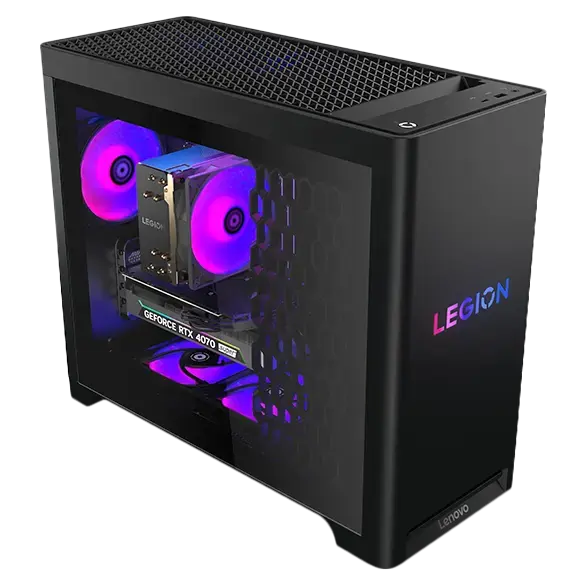
Catalog reference to compare; not ranked by price or measured performance in this game.
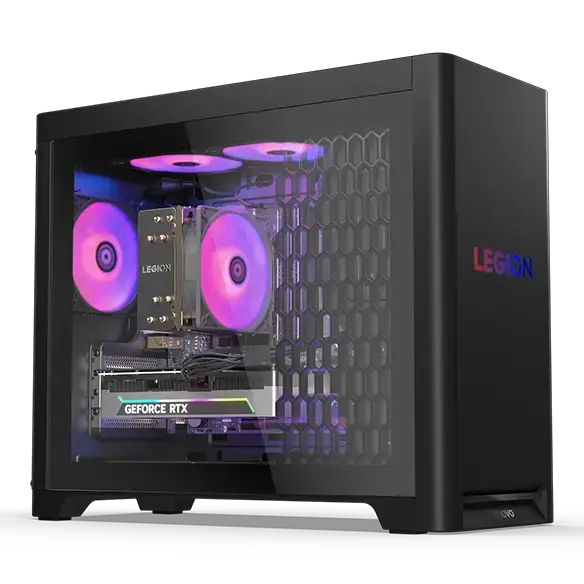
Catalog reference to compare; not ranked by price or measured performance in this game.
METHOD
These buying suggestions are based on published requirements, not GPUStores benchmarks. Game updates and the rest of your PC can change the result.
An unspecified value remains unknown. Confirm delivered price and stock with the retailer before buying.
Our comparison method →Open the official source ↗FAQ
Riot's official 144+ tier names GTX 1050 Ti, Radeon R7 370 or Arc A310. For a new system, an RTX 5050 or Arc B570 is already conservative; prioritize a balanced CPU and monitor path.
No separate official 240 or 360 FPS hardware tier is published on Riot's specifications page. Those targets require measurements on the exact system and patch.
VALORANT alone does not justify it from the official requirements. Buy that class only when other games, resolutions, ray tracing or creator workloads independently need it.
No laboratory benchmark is published on this page. Riot's official tiers are reproduced as source facts; the current GPU classes are editorial buying recommendations, and 240/360 FPS outcomes require exact-system measurements.
RELATED GAMES
Guides selected by genre, graphics load or GPU class.
View all 50 game guides →