2026 CPU PLATFORM COMPARISON
Core Ultra 7 270K Plus vs Ryzen 7 9850X3D: Which Platform Fits You?
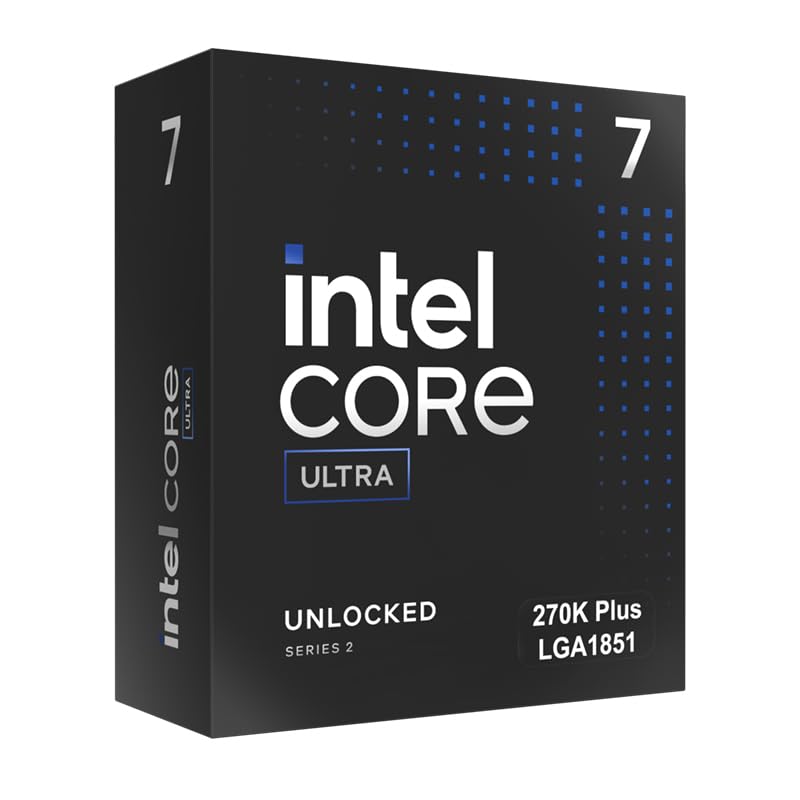
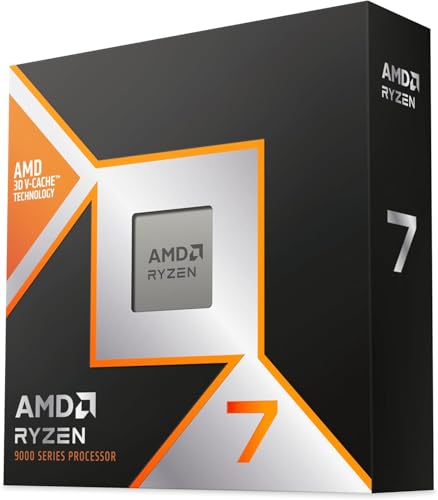
Start with the Ryzen 7 9850X3D for a gaming-first AM5 build. Start with the Core Ultra 7 270K Plus for a mixed gaming, creation and multitasking system that can use 24 cores, Quick Sync and Intel’s NPU. This is a platform decision, not a universal CPU winner: compare motherboard, memory and cooling cost before choosing.
Specifications last verified: August 21, 2026
The 30-second answer
Choose AM5 and the 9850X3D for a gaming-first cart. Choose LGA1851 and the 270K Plus when your actual software uses its hybrid cores, Quick Sync or NPU. Compare the complete cart.
Decision matrix
| Situation | Starting choice | Why |
|---|---|---|
| Gaming-first new build | Ryzen 7 9850X3D | Eight X3D cores on AM5 target the gaming decision. |
| Mixed creation and multitasking | Core Ultra 7 270K Plus | Its 24-core hybrid layout may fit parallel work. |
| Quick Sync workflow | Core Ultra 7 270K Plus | Quick Sync is an Intel feature; AMD does not list it. |
| Existing AM5 platform | Ryzen 7 9850X3D | Reuse can dominate the complete-cart result. |
| Existing compatible LGA1851 platform | Core Ultra 7 270K Plus | Verify board support, BIOS and cooling before reuse. |
| GPU-limited 4K gaming | Total cart decides | CPU differences may be less visible when the GPU limits first. |
 #ADCheck Core Ultra 7 270K Plus · Amazon.ca #ADCheck Ryzen 7 9850X3D · Amazon.ca Open the preloaded F1 comparator →
Source-verified official specifications
Manufacturer facts. GPUStores buying analysis and decision rules are separated below.
| Specification | Core Ultra 7 270K Plus | Ryzen 7 9850X3D |
|---|---|---|
| Architecture | Zen 5 | Arrow Lake · Series 2 |
| Core layout | 8 cores | 8 P + 16 E |
| Threads | 16 | 24 |
| Maximum frequency | 5.6 GHz | 5.5 GHz |
| Cache | 640 KB L1 + 8 MB L2 + 96 MB L3 | 40 MB L2 + 36 MB Smart Cache |
| Published power | 120 W default TDP | 125 W base / 250 W max turbo |
| Socket | AM5 | LGA1851 |
| Memory | AMD DDR5 population table | Up to DDR5-7200 controller support |
| Maximum memory | 256 GB | 256 GB |
| PCIe | Gen 5 · 28 native / 24 usable | Gen 5 + 4 · up to 24 lanes |
| Integrated graphics | 2-core Radeon | Intel Graphics · 4 Xe-cores |
| Quick Sync | No | Yes |
| NPU | None listed | Intel AI Boost · 13 TOPS |
| Included cooler | None | Not claimed |
| Boxed ID | 100-100001973WOF | BX80768270K |
Differences that actually change the purchase
GPUStores buying analysis based on the official facts above, with no static price or invented laboratory result.
Gaming-first versus mixed-workload design
The 9850X3D concentrates on eight Zen 5 cores with 3D V-Cache. The 270K Plus uses a hybrid layout. Match the design to measured software, not a universal winner label.
Eight X3D cores versus 24 hybrid cores
AMD publishes 8 cores and 16 threads; Intel publishes 8 performance cores plus 16 efficiency cores and 24 threads. Games and production tools schedule those designs differently, so test the actual workload.
Quick Sync, iGPU and NPU
Intel publishes Quick Sync, a four-Xe-core iGPU and a 13-TOPS NPU. AMD publishes a two-core Radeon display engine and no dedicated NPU value; do not infer Quick Sync or an AMD NPU.
Power and cooling
Published figures are not directly identical: AMD lists a 120 W default TDP, while Intel lists 125 W base and 250 W maximum turbo power. Size cooling and board settings for the exact processor.
AM5 versus LGA1851
The sockets are not interchangeable. Verify the exact board CPU list, minimum BIOS, ports, PCIe lane sharing, power delivery and cooler mounting.
Memory support versus guaranteed overclock
A published controller speed and a motherboard overclock profile are different claims. Confirm the exact memory kit, board QVL, module count and processor limits; never treat an up-to figure as a guarantee.
Existing platform versus complete rebuild
A compatible board, DDR5 kit and cooler can decide the result before processor price. Compare the cost and risk of reused parts against both complete replacement carts.
GPU-limited 4K gaming
At settings where the graphics card reaches its limit first, a CPU difference can become less visible. Spend from the complete-cart budget where repeatable measurements show the constraint.
Complete-cart decision
Price the processor, exact motherboard, memory, cooling and any adapters or replacement parts together. The lowest CPU shelf price does not necessarily create the lowest delivered platform cost.
Alternatives by workload
For gaming value, compare the 9800X3D; for heavier parallel work, compare higher-core Ryzen and Core Ultra options. Keep the shortlist tied to measured software and platform cost.
Best profile for Core Ultra 7 270K Plus
Mixed gaming, creation, encoding and multitasking that uses hybrid cores, Quick Sync or the NPU.
Best profile for Ryzen 7 9850X3D
Gaming-first AM5 builds with a powerful GPU and real CPU-limited targets.
Core Ultra 7 270K Plus limitations
Higher published turbo-power ceiling and a complete LGA1851 platform cost to verify.
Ryzen 7 9850X3D limitations
Eight cores are not a universal productivity winner; no Quick Sync or dedicated NPU value is published.
Delivered-price or complete-cost rule
Compare the complete delivered cart without static prices.
| Situation | Decision rule |
|---|---|
| Delivered CPU | Exact boxed processor, seller, tax and delivery. |
| Exact motherboard | Socket, BIOS, VRM, ports and lane sharing. |
| Compatible memory | Exact kit, QVL and population limits. |
| Cooling | Mount, capacity, acoustics and case clearance. |
| Reusable parts | Case, PSU, storage, cooler and memory where compatible. |
| Total delivered cost | Compare both complete carts before choosing. |
Compatibility
AM5 and LGA1851 are not interchangeable. Confirm the exact board CPU list and BIOS, DDR5 kit, cooling mount, PSU and case before ordering.
Reuse can decide the winner. An existing compatible board, memory kit or cooler can outweigh a processor-only difference.
#ADCheck Core Ultra 7 270K Plus · Amazon.ca #ADCheck Ryzen 7 9850X3D · Amazon.ca Open the preloaded F1 comparator →Choose this if…
- Your workloads use many cores, Quick Sync or Intel's NPU.
- A complete LGA1851 cart is competitive.
Skip this if…
- You want the lowest published power ceiling or gaming-first simplicity.
Choose this if…
- Gaming is the primary workload.
- You already own a compatible AM5 platform.
Skip this if…
- Parallel creation and Quick Sync drive the purchase.
Relevant alternatives
#ADCheck Core Ultra 7 270K Plus · Amazon.ca #ADCheck Ryzen 7 9850X3D · Amazon.ca Open the preloaded F1 comparator →Compare the specifications that matter
Compare models side by side; missing information stays clearly marked.
Open this preloaded pair →Frequently asked questions
Which CPU is better for gaming?
Start with the 9850X3D for a gaming-first AM5 build, then verify the exact games, GPU and total platform cost.
Which is better for productivity?
The 270K Plus is the starting point when software uses its 24-core hybrid layout or Quick Sync. Test the exact applications.
Which one has integrated graphics?
Both. The 9850X3D has a two-core Radeon display engine; the 270K Plus has Intel Graphics with four Xe-cores and Quick Sync.
Which platform uses less published power?
AMD lists 120 W default TDP. Intel lists 125 W base and 250 W maximum turbo power. These are different published metrics, not a wall-power measurement.
Can I reuse my current motherboard?
Only if its socket, CPU support list and BIOS match: AM5 for the AMD processor, LGA1851 for Intel.
Methodology
GPUStores does not claim to operate a laboratory. We separate cited manufacturer facts from buying analysis, compare delivered and platform cost, and revise decisions when products change.
Read the complete methodology →Official sources
Intel — Core Ultra 7 270K Plus ↗AMD — Ryzen 7 9850X3D ↗Final verdict
Choose the Ryzen 7 9850X3D for a gaming-first AM5 cart. Choose the Core Ultra 7 270K Plus for mixed work that uses its cores, Quick Sync or NPU. The complete platform, not a universal CPU label, decides.
#ADCheck Core Ultra 7 270K Plus · Amazon.ca #ADCheck Ryzen 7 9850X3D · Amazon.ca Open the preloaded F1 comparator →Canonical URL: https://gpustores.com/guides/270k-plus-vs-9850x3d